Most of us do not think much about what happens behind the food we eat.
We see the final product on the shelf — the bread, the drink, the snack, the meal — but we rarely see what is left behind during the process of making it.
In many food systems, these leftovers are treated as waste. They may still have value, but because they are not the main product, they are often ignored, discarded, or used for something far less meaningful.
At Sumo Wonder, this is something we wanted to look at differently.
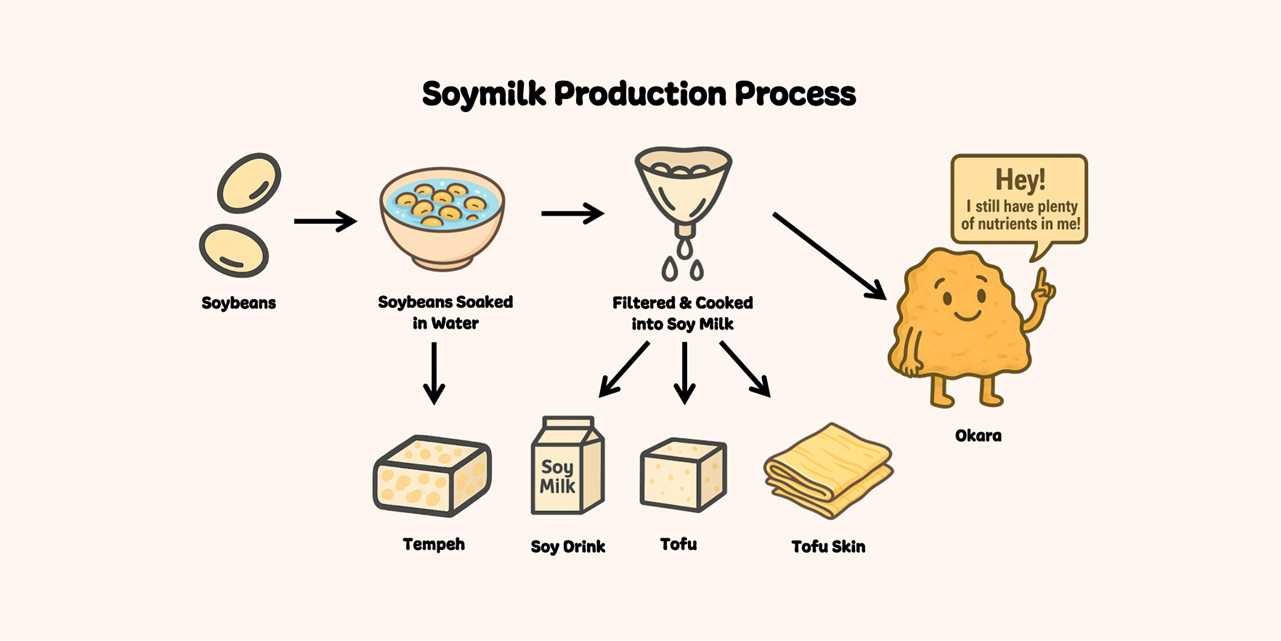
Our story began with okara, also known as soy fibre.
Okara is the soy pulp that remains after soybeans are processed. For many years, it has often been seen as a by-product. In some places, it is fed to animals. In other cases, it may simply be thrown away.
But we asked a simple question:
“What if this overlooked ingredient could become something useful, nutritious, and enjoyable?”
Seeing Waste Differently
When people hear the word “waste,” they often think of something with no value.
But in food, that is not always true.
Sometimes, what we call waste is simply something we have not found the right use for yet. It may still carry nutrition. It may still have function. It may still have potential.
Okara is a good example of this.
Instead of seeing soy pulp as something left behind, we saw it as an ingredient that deserved a second look. It was rich in possibility, but it needed to be processed, understood, and reimagined in a way that made sense for everyday food.
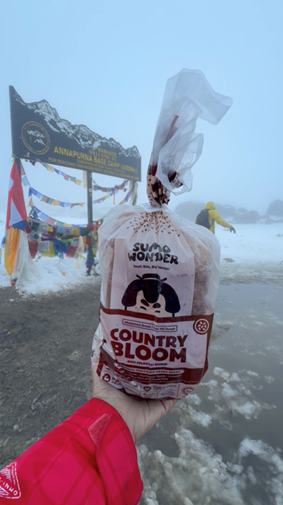
That is how okara became part of Sumo Wonder bread.
To us, this is what “From Waste to Worth” means. It is not only about reducing waste. It is about changing the way we define value.
What Circular Food Means
A lot of people talk about sustainability, but the idea can sometimes feel too big or too technical.
Circular food thinking is actually quite simple.
In a traditional food system, ingredients are used to make a main product, and whatever is left behind is often treated as the end of the story.
Circular thinking asks a different question:
“Can what is left behind become the beginning of something new?”
Instead of following a straight line — use, produce, discard — circular thinking looks for ways to keep value within the system for longer.
For Sumo Wonder, okara gave us a practical way to explore this idea.
Soybeans are already used to make many familiar products. But after that process, soy pulp remains. Rather than letting it go unnoticed, we wanted to give it a new purpose by turning it into something people could easily enjoy: bread.
Why Bread Makes Sense
Bread is one of the most familiar foods in everyday life.
It is simple, accessible, and already part of many people’s routines. That is exactly why we chose it.
We did not want sustainability to feel complicated. We did not want better food choices to feel distant or difficult. We wanted to start with something people already know.
By incorporating okara into bread, we could bring a bigger idea into a simple daily product.
A slice of bread became more than just a slice of bread. It became a small example of how food can be made with more thought behind it.
Small Choices, Bigger Meaning
We believe the future of food is not only about creating new products. It is also about asking better questions.
Can we use our resources more carefully?
Can we reduce what is unnecessarily wasted?
Can we create food that is enjoyable, practical, and more responsible at the same time?
These questions matter because the way food is made affects more than just what we eat. It affects how ingredients are valued, how resources are used, and how brands contribute to the world around them.
At Sumo Wonder, we know we are only one small part of a much bigger food system. But we also believe that small changes can still be meaningful when they are made with intention.
Choosing to work with okara is one of those changes.
It allows us to take something often overlooked and give it a new role in everyday food.
The Future of Food Starts With Rethinking Value
“From Waste to Worth” is more than a phrase for us.
It is a reminder that good ideas do not always begin with something new. Sometimes, they begin with something that already exists — something familiar, something humble, something that people may not have paid enough attention to.
Okara taught us that value is not always obvious at first glance.
It showed us that an ingredient once seen as a by-product could become part of a better food story. It also showed us that sustainability does not always have to be complicated. Sometimes, it can begin with a simple decision to look at waste differently.
At Sumo Wonder, we hope to continue building food that reflects this belief.
Food that is familiar, but more thoughtful.
Food that is enjoyable, but also more responsible.
Food that shows how overlooked ingredients can be given a new purpose.
Because the future of food should not only be about what we create.
It should also be about how wisely we use what we already have.